This site requires audio.
Click anywhere to begin.
Techgnosis
Tarot Card Reading
Astral Glimmers
Escape Velocity
Juxtapositions
Horoscope Reading
Enigmatic Currents
Enlightenment Myth
Deep Weirdness
Crystal Ball Reading
Algorithmic Agents
Editor's Note
1
2
3
4
5
6
7
8
9
10
11
by Erik Davis
Take a deep breath.
Select three cards.
Do you rely upon digital connections to fulfill your social life?
Do you remember anything from your last doomscroll?
Have you lost touch with your offline self?
2
Astral Glimmers
There was a peculiar feeling in the air those days, at least in my neck of the woods, an ambient sense of arcane possibility, cultural mutation, and delirious threat that, though it may have only reflected my youth, seemed to presage more epochal changes to come.
Recalling that vibe right now reminds me of the peculiar spell that fell across me and my crew during the brief reign of David Lynch’s Twin Peaks, which began broadcasting on ABC in the spring of 1990. Plunging down Lynch’s ominous apple-pie rabbit hole every week, we caught astral glimmers of the surreal disruptions on the horizon ahead.
I wrote an article in which I claimed that, in addition to dissolving the concentrated power of mass media, outlets like ABC, the onrushing proliferation of digital content channels and interactive media was going to savage “consensus reality” as well. It wasn’t just the technology that was going to change; the mass mind itself was, in an au courant bit of jargon from Deleuze and Guattari’s A Thousand Plateaus, going molecular. Molecular meant a thousand subcultures.
3
Pockets of alternative practices across the spectrum crackled with millennialist intensity in the early nineties, as if achieving a kind of
Escape
Velocity.
Underground currents of electronic music, psychedelia, rap, ufology, cyberculture, paganism, industrial postpunk, performance art, conspiracy theory, fringe science, mock religion, and other more or less conscious reality hacks invaded the spaces of novelty and possibility that emerged in the cracks of the changing media.
4
Juxtapositions
As a journalist, as well as a heady seeker of sorts, I was already devoted to tracking the juxtaposition of spirituality and the material grit of popular culture, a juxtaposition that in the nineties came to include new technologies, human augmentation tech, and the dawning “space” of digital mediation.
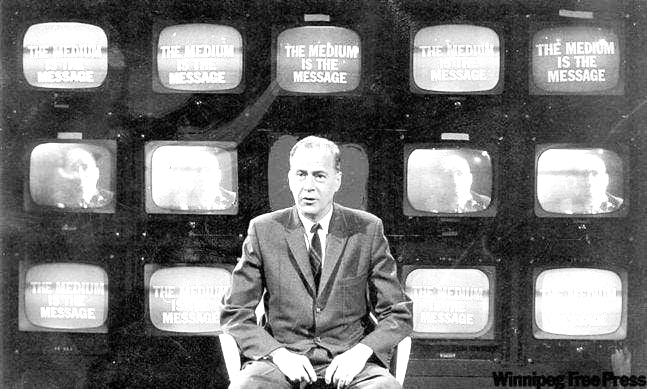
Once I tuned into this techgnostic frequency, I realized that the waves radiated backward as well as forward. I became seized by the McLuhanesque conviction that the history of religion was really just a part of the history of media. I began to track these secret histories, and my notes grew until they demanded to be a book.
As I befriended technopagans or stumbled across cyborg passages in hermetic texts, I felt I no longer had choice in the matter. I was possessed by what Teilhard had called the “demon (or angel) of Research,” which is one way of describing what takes place when the object of study turns around and grabs you by the balls. I had to write TechGnosis
Please identify your sun, moon, and rising sign
...
How much of your digital identity is fantasy?
Is it a reflection of your hopes and dreams?
Where does your true personality lie?
Within the stars or within the screens?
6
I think TechGnosis continues to speak despite its sometime anachronism because it taps the
Enigmatic
Currents
of fantasy, hope, and fear that continue to charge our tools, and that speak even more deeply to the profound and peculiar ways those tools shape us in return. These mythic currents are as real as desire, as real as dream; nor do they simply dissipate when we recognize their sway.
7
Enlightenment Myth
Nonetheless, technoscience continues to propagate the Enlightenment myth of a rational and calculated life without myths, and to promote values like efficiency, productivity, entrepreneurial self-interest, and the absolute adherence to reductionist explanations for all phenomena.
All these day-lit values undergird the global secularism that forms the unspoken framework for public and professional discourse, for the “worldview” of our faltering West.
At the same time, however, media and technology unleash a phantasmagoric nightscape of identity crises, alternate realities, memetic infection, dread, lust, and the specter of invisible (if not diabolical) agents of surveillance and control
8
That these two worlds of day and night are actually one matrix remains our central mystery: a rational world of paradoxically
Deep
Weirdness
where, as in some dying earth genre scenario, technology and mystery lie side-by-side, not so much as explanations of the world but as experiences of the world.
Go ahead... I'm listening.
I'm still listening.
10
Algorithmic Agents
As in the tale of the sorcerer’s apprentice, algorithmic agents will be understood as possessing a mind of their own, or serve as proxies for invisible agents of crime or all-watching control.
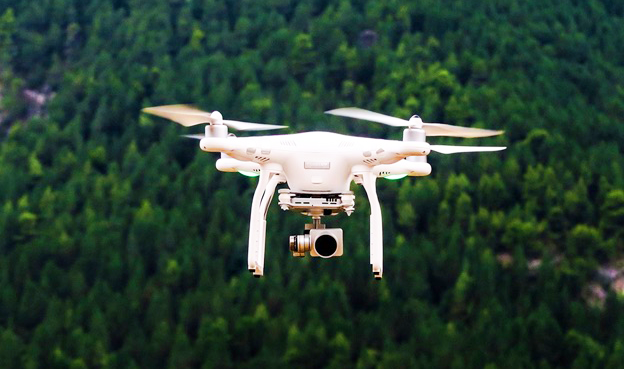
In other words, a kind of anxious animism, the mindframe once (wrongly) associated with the primitive origins of religion, is returning in a digitally remastered form. Intelligent objects, drones, robots, and deeply interactive devices are multiplying the nonhuman agents with whom we will be forced to negotiate, anticipate, and dodge in order to live our lives.
One side of this new animism we already know by another name: paranoia, which will continue to remain an attractive (and arguably rational) existential option in our networked and increasingly manipulated world.
11
Like the warm crackles of vinyl, or the cosmic squiggles of a wild
modular synth, or the evocative glow of an actual Polaroid,
the resonant frequencies of a less networked world
still illuminate all my relations.
I do not feast on nostalgia,
but nostalgia is not the same thing as
affirming the gone world that still signals us now,
in the timeless time of transmission.
Cyborg Reflections: Techgnosis Then
New afterword written for the 2015 edition of
TechGnosis: Myth, Magic, and Mysticism in the Age of Information by Erik Davis.
are you still paying attention?
Now streaming: Techgnosis